
For many migrants, British citizenship is often described as the final step in a long immigration journey. People talk about application forms, eligibility requirements, language tests, and passports. They discuss timelines, fees, and processing periods.
But if you’re married and building a family life in the UK, citizenship rarely feels like a simple administrative process.
It feels personal. In fact, it often feels far more emotional than most people expect.
By the time you reach the point of applying for British citizenship, you have usually spent years navigating immigration rules, visa renewals, changing policies, financial requirements, and the constant uncertainty that comes with temporary permission to remain in a country you now call home.
You have built friendships, established routines, paid taxes, contributed to your community, and perhaps even raised children. Yet somewhere in the background, there has always been a reminder that your immigration status still required renewal, approval, or verification.
That is why citizenship feels different. It is not simply about gaining a passport. It is about reaching a stage where years of uncertainty finally begin to fade. And when marriage is part of the picture, that feeling often becomes even more profound.
British Citizenship Through Marriage Changes More Than Your Immigration Status
One of the most beautiful things about building a life with someone is that your future gradually becomes intertwined. The decisions you make are no longer just about you. They affect your partner, your household, your finances, and often your children as well. That is why British citizenship through marriage carries a different emotional weight.
For a single applicant, citizenship may represent personal stability and security. For a married applicant, it often represents family stability. It affects long-term plans that many couples quietly dream about. Things like buying a home, raising children, building financial security, or simply knowing that your future is no longer dependent on the next visa application.
Many migrant couples spend years planning around immigration timelines. Holidays are arranged around visa renewal dates. Career decisions are influenced by sponsorship requirements. Financial goals are delayed because application fees must take priority. Citizenship changes that dynamic.
For many families, it marks the moment when immigration stops being the centre of every major decision. That shift creates a sense of freedom that is difficult to explain to someone who has never experienced immigration uncertainty.
British Citizenship Through Marriage Offers a Faster Route for Eligible Spouses
One aspect of citizenship that many migrants discover surprisingly late is that marriage to a British citizen can affect the timeline.
For most applicants, obtaining Indefinite Leave to Remain (ILR) is not immediately followed by citizenship eligibility. In many cases, applicants must hold ILR for an additional twelve months before applying for naturalisation.
However, spouses of British citizens benefit from a different pathway. If you are married to a British citizen and meet the relevant requirements, you may be eligible to apply for citizenship as soon as your ILR is granted. For many couples, this can significantly shorten the waiting period between settlement and citizenship. Of course, this does not mean the process becomes automatic or guaranteed. The eligibility requirements still apply, and applicants must continue to satisfy all relevant criteria. However, the accelerated timeline often comes as welcome news after years of waiting through various immigration stages.
What makes this particularly meaningful is that it can provide families with certainty sooner than expected.
After years of temporary permissions and renewal deadlines, even a shorter wait can feel like a tremendous gift.
British Citizenship Through Marriage Still Comes With Important Requirements
Although marriage can create a faster route to citizenship, it does not remove the need to meet the Home Office’s requirements.
This is where it is important to separate emotion from preparation.
Many applicants become so excited about reaching this stage that they assume the hardest part is over. In reality, citizenship applications still require careful attention to detail.

Applicants must satisfy the relevant naturalisation requirements, including demonstrating sufficient knowledge of English, passing the Life in the UK Test where applicable, and meeting the Good Character requirement.
The Good Character assessment is particularly important because it looks beyond simple paperwork.
Authorities may consider factors such as criminal history, immigration compliance, financial conduct, tax obligations, and other indicators of responsible behaviour.
For this reason, citizenship should not be approached casually simply because marriage has shortened the timeline.
Think of it this way: marriage may help you reach the door faster, but you still need to meet the requirements to walk through it successfully.
The good news is that if you’ve spent years complying with immigration rules, maintaining your records, and building a stable life in the UK, you are already laying the foundation for a strong application.
British Citizenship Through Marriage Can Bring Unexpected Emotions
There is another side of citizenship that people do not talk about enough.
The emotional side.
Many migrants assume they will feel nothing but excitement when the moment arrives. And yes, excitement is certainly part of it. Pride, relief, gratitude, and joy often accompany the process. But many people also experience something more complicated. They feel conflicted. After all, citizenship is not simply about gaining something new. Sometimes it also prompts reflection on where you came from.
You may find yourself thinking about the country you left behind, the family members who remain there, or the version of yourself that first arrived in the UK carrying little more than hope and determination. For some people, there is a quiet sense of grief mixed with celebration.
And that is completely normal. Building a life in the UK does not require abandoning your history. Becoming British does not erase your culture, your language, your memories, or your connection to home.
Human identity is rarely that simple. In many ways, citizenship becomes an addition to your story rather than a replacement for it.
You are not choosing one life over another. You are acknowledging the journey that brought both parts together.
British Citizenship Through Marriage Is a Celebration of Resilience
When the application is finally submitted, it is tempting to focus only on the outcome.
The certificate.
The ceremony.
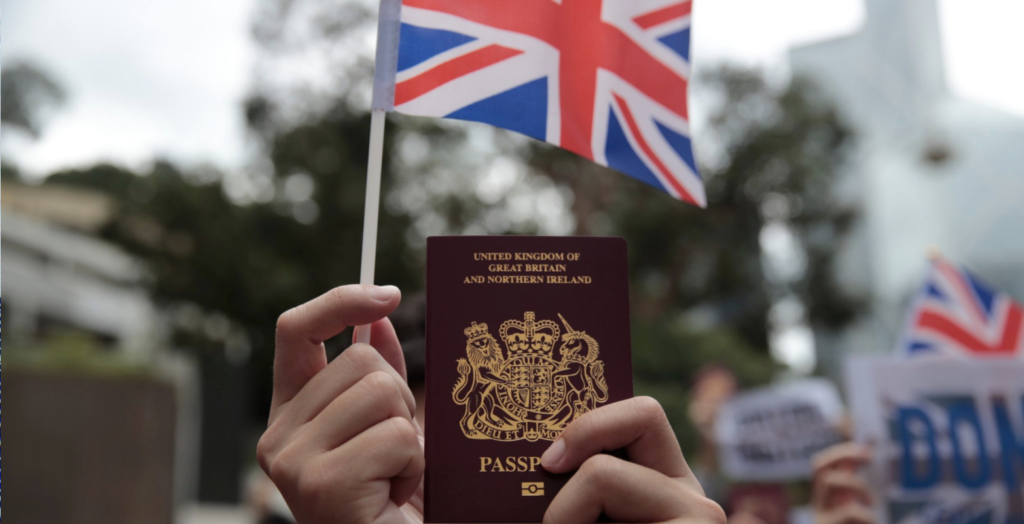
The passport.
But those symbols represent something much bigger.
They represent years of resilience.
They represent sacrifices that few people see. The application fees, the document gathering, the endless waiting, the uncertainty, the career decisions, the financial planning, and the emotional strength required to keep moving forward. For many married migrants, citizenship is not simply proof of legal status.
It is proof that they built a life despite the obstacles. It is evidence that they adapted, persevered, and created something meaningful for themselves and their families.
British citizenship through marriage is not just the end of an immigration process. It is the moment years of uncertainty finally begin to transform into permanence.
So when your time comes, don’t rush past the milestone.
Celebrate it. Acknowledge how far you’ve come. Behind every successful citizenship application is a story of courage, sacrifice, resilience, and hope. And that story deserves to be honoured just as much as the passport itself.




Leave a Reply