
You have checked your documents, completed the application, paid the required fee and finally pressed submit.
After years of visa applications, extensions, work restrictions, immigration paperwork and waiting, you have reached another major stage of your UK journey.
But now what?
The application has gone. Your money has been paid. Your documents are uploaded. You may have received a confirmation message, but the actual decision is still somewhere ahead.
This is when the waiting game begins.
You might find yourself checking your email before getting out of bed, refreshing your inbox during lunch and wondering whether every unknown number calling your phone is the Home Office. It is completely understandable. British citizenship is a big deal, and nobody wants to miss an important message after coming this far.
The good news is that the post-submission process follows a general pattern. Understanding what happens next can help you stay calm, organised and ready for the final stage.
After Submitting Your Citizenship Application, What Happens First?
Once you submit your naturalisation application, you should receive confirmation that it has been received. Depending on the application process, this may come through an online confirmation or a letter. GOV.UK explains that applicants should receive confirmation and will be contacted if they need more information. (GOV.UK)
However, receiving confirmation does not mean your application has already been approved.
It simply means the application has entered the process.
Your information will be reviewed against the relevant citizenship requirements. For a standard naturalisation application, this can include your residence, absences from the UK, immigration history, good character, language requirement, Life in the UK Test and other eligibility conditions.
If you have already obtained indefinite leave to remain or settled status, remember that your citizenship application is a separate legal process. Having settled status is important, but it does not automatically guarantee that naturalisation will be approved.
This is why it is important to keep your expectations realistic. You have completed your part for now, but the Home Office still needs to assess the application.
Book Your Biometrics Within the Required Time
One of the most important things to do after submitting your application is to complete your biometric enrolment when instructed.
Biometrics usually involve your fingerprints and a photograph. The Home Office uses this information to verify your identity and carry out the relevant checks.
For naturalisation applications, current guidance says that applicants will usually need to enrol their biometrics within 45 days of submitting the application. Failure to complete this step within the required period can invalidate the application. (GOV.UK)
You should wait for the instructions explaining how and where to enrol. Depending on your circumstances, the Home Office may be able to reuse biometrics provided during an earlier immigration application, but you should not assume that this will happen automatically.
If you are required to attend an appointment, follow the instructions carefully and keep proof of your appointment or submission.
Do not leave this step until the last minute.
Your application may have taken months of preparation, and it would be frustrating for the process to be affected because you missed a biometric deadline.
How Long Does a British Citizenship Application Take?
The standard processing expectation is usually within six months.
That does not mean every applicant will receive a decision exactly six months after submitting. Some applications are decided sooner, while others may take longer if additional checks or information are required. GOV.UK states that applicants will usually receive a decision within six months and will be contacted if the Home Office expects the application to take longer. (GOV.UK)
So, if you submitted your application last week, refreshing your inbox every ten minutes will not make the caseworker work faster.
Use the waiting period wisely.
Continue working if your immigration permission allows it. Keep your documents safe. Check your email regularly, including your junk or spam folder, and make sure the Home Office can contact you.
You should also remember that a citizenship application does not give you immigration permission to remain in the UK while it is being considered. You must continue to hold valid immigration permission until you have received a decision and completed your citizenship ceremony. (GOV.UK)
This is especially important if your current visa or settled status documentation needs attention.
What Happens While the Home Office Reviews Your Application?
During the waiting period, caseworkers may assess the information you provided and carry out checks with relevant records or government departments.
They may review your residence and travel history, immigration records and good-character requirements. If something needs clarification, you may be asked to provide additional information.
For example, the Home Office could contact you because it needs clarification about a period outside the UK, an address, an immigration document or another part of your application.
Do not assume that receiving a request for more information means your application is going to be refused.
Sometimes it simply means the caseworker needs a clearer explanation or additional evidence before making a decision.
If you receive a request, read it carefully and respond within the deadline given. Avoid sending random documents that do not answer the question. Instead, provide a clear explanation and relevant supporting evidence.
Keep copies of everything you submit.
It is also wise to maintain an organised folder containing your application confirmation, biometric appointment details, correspondence from the Home Office and copies of any additional documents you provide.
Update UKVI If Your Circumstances Change
Life does not stop because you have submitted a citizenship application.
You may move house, get married, separate, change your name, change your contact details or become involved in a legal matter while waiting.
If your circumstances change, you should contact UK Visas and Immigration. GOV.UK specifically gives examples such as moving house, getting married or being arrested. (GOV.UK)
Do not assume that because you already submitted your form, you can ignore important changes.
For example, if you move from your flat in Birmingham to a new address in Manchester, make sure the Home Office has your current contact details. If your email address or phone number changes, update those details too.
The aim is to prevent missed letters, missed requests for information or delays caused by outdated contact details.
You should also continue complying with the conditions of your existing immigration permission while your citizenship application is pending.
Can You Travel After Submitting Your Citizenship Application?
Generally, you can travel outside the UK while your citizenship application is being considered, provided you have a valid passport and valid evidence of your immigration status.
However, you should be careful.
A pending citizenship application does not replace your immigration permission. You must still be able to return to the UK lawfully, and you should make sure the Home Office can contact you if it needs information. (GOV.UK)
If you have a biometric appointment or receive a request for information while abroad, you must still deal with it within the required timeframe.
So, before booking a long trip, check your documents and make sure you will be available to complete any outstanding part of the process.
What Happens After Citizenship Is Approved?
The email or letter confirming that your citizenship application has been successful may be one of the most exciting messages you receive.
But there is still one important step before you officially become a British citizen: the citizenship ceremony.
If you are aged 18 or over and your application is successful, you will be invited to attend a ceremony. If you are in the UK, the Home Office invitation will normally tell you which local authority to contact to arrange it. (GOV.UK)
You must arrange and attend the ceremony within 90 days of receiving the invitation, unless different instructions or an approved arrangement applies. If you fail to attend within the required period without a good reason, your application may be refused, and you may need to apply again. (GOV.UK)
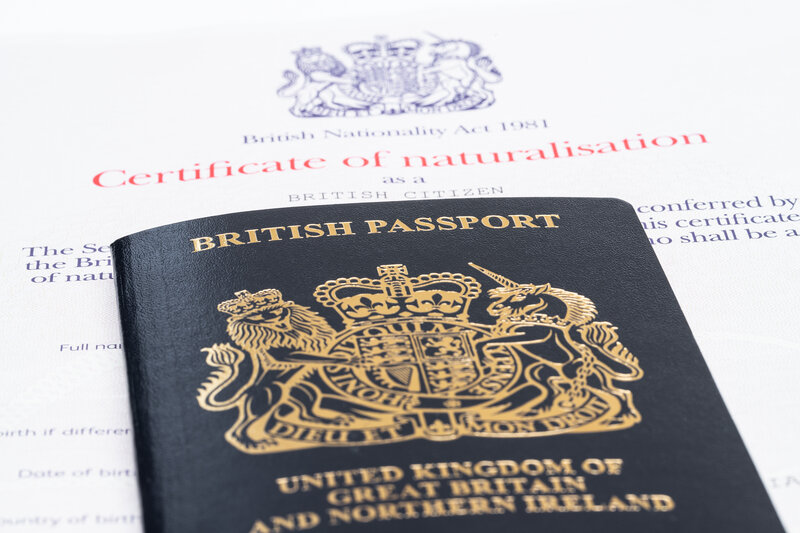
At the ceremony, you will make an oath or affirmation of allegiance and a pledge. You will then receive your certificate of naturalisation.
That certificate is the document confirming that you have become a British citizen.
You Are Almost at the Finish Line
Submitting your citizenship application is a major achievement, but the journey is not completely finished until you have received a decision and attended your ceremony.
For now, focus on what you can control.
Complete your biometrics on time. Check your email. Respond quickly if the Home Office requests more information. Keep your contact details updated and maintain valid immigration permission while you wait.
And please, try not to let the waiting consume your entire life.
Continue working, spending time with family, building your career and enjoying the life you have worked so hard to create in the UK.
When the approval finally comes, you will have more than a certificate in your hands. You will have a reminder of the years of effort, uncertainty and courage that brought you there.
From visa fees and extensions to settled status and naturalisation, every stage has been part of the journey.
You are not quite at the finish line yet.
But you are very close.



Leave a Reply