
People believe that getting a British passport is basically all about staying in the UK long enough; well, if only it were that simple. My friend, the UK immigration system does not work on vibes or guesswork; it’s structured, intentional, and every step has to be documented. If you miss a requirement, give a wrong date, or even forget one small document, your entire timeline shifts by months.
Let me break this down for you in plain, everyday English, as I would explain it to a friend sitting beside me and trying to understand what leads to a British passport.
Understand Your Route to Citizenship – It’s Everything
Before you start Googling “how to get a British passport,” the first thing is to identify your actual route. Not everyone becomes a citizen the same way, and if you misunderstand this step, you may find yourself preparing for the wrong documents, taking unnecessary tests, or waiting longer than required.
Naturalisation (The Route Most Migrants Use)
If you’re like most people on Skilled Worker visas, Global Talent visas, or graduate visas who later switched, this is probably your path.
To be eligible, candidates must possess:
Lived legally in the UK for 5 years, and
Must have held Indefinite Leave to Remain (ILR) for at least 12 months.
This means even when you reach your 5-year mark, you still have to hold ILR for one more year before applying. If you’re married to a British citizen, congratulations, you have the shortest path.
You need only:
3 years of legal residence, and
ILR (no additional one-year wait).
Among the biggest advantages of being married to a British citizen, this is one.
Citizenship by Birth or Descent
Why this first step matters:
If you misunderstand your category, you will make mistakes, including submitting incorrect documents, undergoing unnecessary tests, and wasting application fees due to incorrect timing. So get this part right.
2. Secure Your Indefinite Leave to Remain ILR
Let me make a point: you cannot apply for British citizenship without ILR. ILR is like your permanent resident status; it’s what everything is based on.
Most people qualify for ILR after 5 years on visas such as:
Skilled Worker
Global Talent
Spouse/Partner
Long-term visas for work purposes:
But the biggest challenge is in the residency requirement, which catches most people unawares.
Travel Limit Rules You Must Not Break
The eligibility for applying for ILR is:
Not more than 450 days outside the UK in the last 5 years, and
Not more than 90 days outside the UK in the last 12 months.
This includes ALL trips-holidays, emergencies, work trips, funerals, and everything.
Documents to Keep Safe for ILR
One thing that the immigration system in the UK has taught many migrants is that you must keep every document like gold.
Current and old BRPs
Payslips
P60S and HMRC records
Tenancy agreements or utility bills
Employment letters
Work contracts
Missing documents can delay ILR… and delaying ILR will delay citizenship. So stay organised.
3. Pass the “Life in the UK” Test
This is one part that intimidates people unnecessarily, while with proper preparation, you’ll be fine.
The Reality
The exam is 24 questions.
You need 75% (18 correct answers) to pass.
The questions are all taken from the official Life in the UK Handbook.
And let me tell you-don’t assume the questions are common knowledge.
Even British-born citizens often fail the practice tests. You’ll see questions like:
“In what year was the Magna Carta signed?
So, study properly, please.
4. English Language Proficiency Requirement
Unless you are from a majority English-speaking country, the Home Office wants to see evidence that you can communicate clearly.
You can meet this requirement by:
Taking an English test approved by UKVI (like IELTS for UKVI), or
Showing a degree taught in English.
5. Meet the Good Character Requirement
This part is deeper than people realise.
“Good character” isn’t just about whether you’ve been to jail or not.
Criminal records
Immigration history
Tax compliance
Debt and credit problems
Previous overstaying
Court judgments
Whether you have ever used false information
If there have been any problems in the past, honesty is better than concealing anything. The Home Office values transparency more than silence.
Good character essentially means that you follow the laws of the UK, you pay taxes, you respect commitments, and you uphold integrity. Even outstanding taxes or unaccounted-for gaps in your record can delay an application.
6. Apply for Citizenship Online
Once you have everything on hand-tests passed, ILR in hand, documents sorted and sifted-you do the main application.
On gov.uk, you will:
Fill the form
Upload your documents
Pay the fee payable- approximately £1,580 in 2025
Book your biometrics
Timeline After Biometrics
You will usually have to wait 3–6 months. In that time:
Stay reachable: don’t miss emails
Respond promptly to Home Office requests
Avoid unnecessary long travel.
Any missed correspondence can lead to holdups.
7. Attend Your Citizenship Ceremony
When your application is approved, you’ll be invited to a ceremony at your local council.
During the ceremony:
You take your Oath or Affirmation
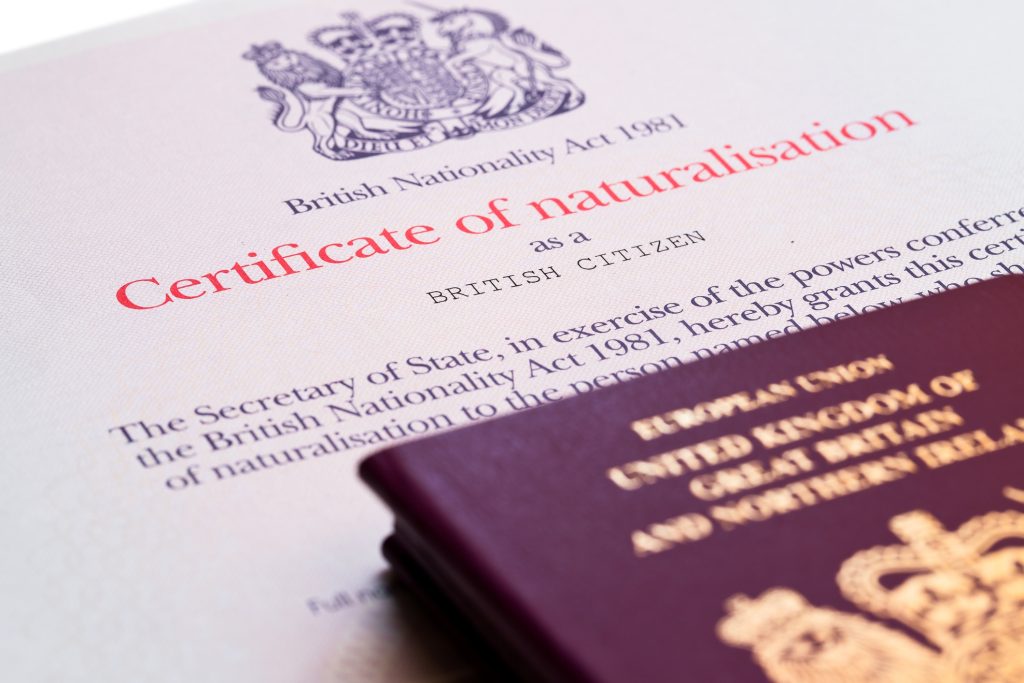
You get your Certificate of Naturalisation
That is the emotional moment most migrants never forget; it’s the final confirmation that all your years of hard work have finally paid off.
8. Apply for Your British Passport
After you get your naturalisation certificate, you may finally:
Apply online or by post
Upload your photos and documents
Wait for processing, usually 3–6 weeks
And, just like that, you are officially a British passport holder.
Final Thoughts: It’s a Process, Not a Mystery
Acquiring British citizenship is not left to guesswork. It is a well-structured journey.
If one knows the steps involved, it becomes far less stressful.
The keys are basic:
Start Early
Keep your documents. Stay within travel limits. Prepare for your tests. Pay your taxes. Do these consistently, and you’ll put yourself in position for a smooth, successful path to citizenship with no delays, surprises, or unnecessary problems.




Leave a Reply